
Our Location
304 North Cardinal St.
Dorchester Center, MA 02124
Silhouette first, costume second, colour last. Why we work in that order, and the ideas that get thrown out along the way.
Every character we make starts as the same shape, and that constraint is the whole point. Working from one base silhouette means the differences have to come from somewhere more interesting than body shape.
Before anything else, we ask whether the figure is readable at five metres as a shape. Held arm’s length, a character can carry all sorts of small detail and still look great in a photo. Across a room, that detail turns to mush and all that’s left is the outline. If the outline isn’t doing anything, the character fails at the size we actually sell it at.
This is where most ideas die. Roughly half of what gets sketched never reaches the next stage, usually because the additions don’t change the silhouette at all, they just add decoration to a shape that already worked.
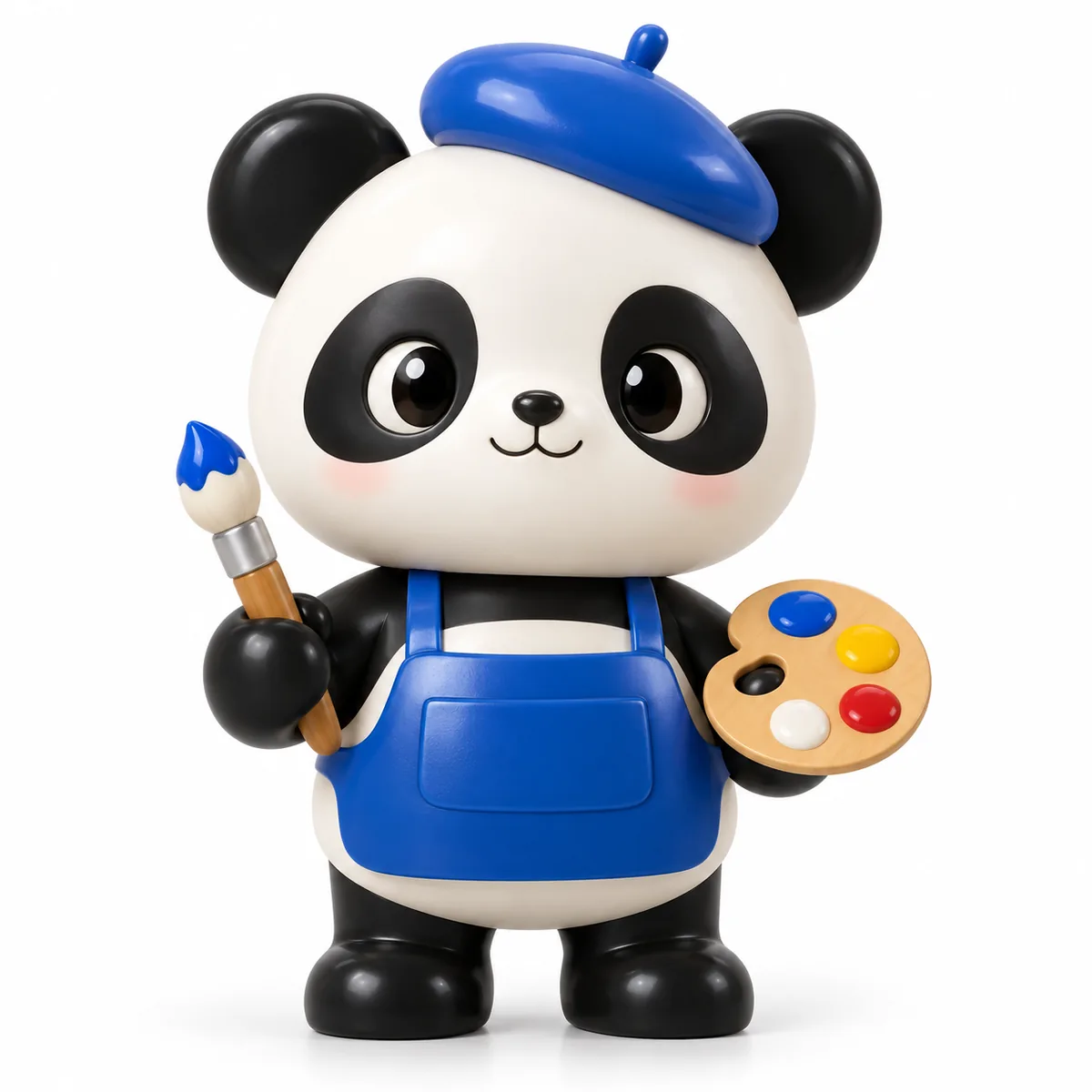
A character needs a job. Baker, courier, gardener, night watch. The role generates the props, and the props are what make the silhouette distinctive. A panda with a watering can has an outline you can read from behind, which is more than most characters manage.
The role also tells us the pose. A courier leans forward slightly. Someone on a night watch doesn’t. These are small decisions and they’re what stops a shelf of them from looking like the same figure in different colours.
Colour is decided after the sculpt is locked, which frustrates people who expect it first. Doing it this way means the palette has to work with the actual form, including the recesses and the parts that will be in shadow on a shelf. A colourway designed on a flat drawing usually looks wrong on the object, because the drawing never had the shadows.
We also check the palette under warm light, since almost nobody displays these under daylight-balanced lamps. A few colourways have been rejected at this stage for turning muddy at 2700K.
Anything that only works in a photograph. Pieces we can’t actually cast at this size without the detail softening, poses that leave the figure resting its weight somewhere thin, colours that need a gradient we can’t airbrush consistently by hand. There’s a whole folder of those, and it’s a useful folder.
Blue Cap Artist Panda went through four props before we settled on the brush. The earlier ones were all too small to read at five metres.
