
Our Location
304 North Cardinal St.
Dorchester Center, MA 02124

The label changes what people expect from a piece. Where our figures sit on that line, and why we stopped arguing about it.
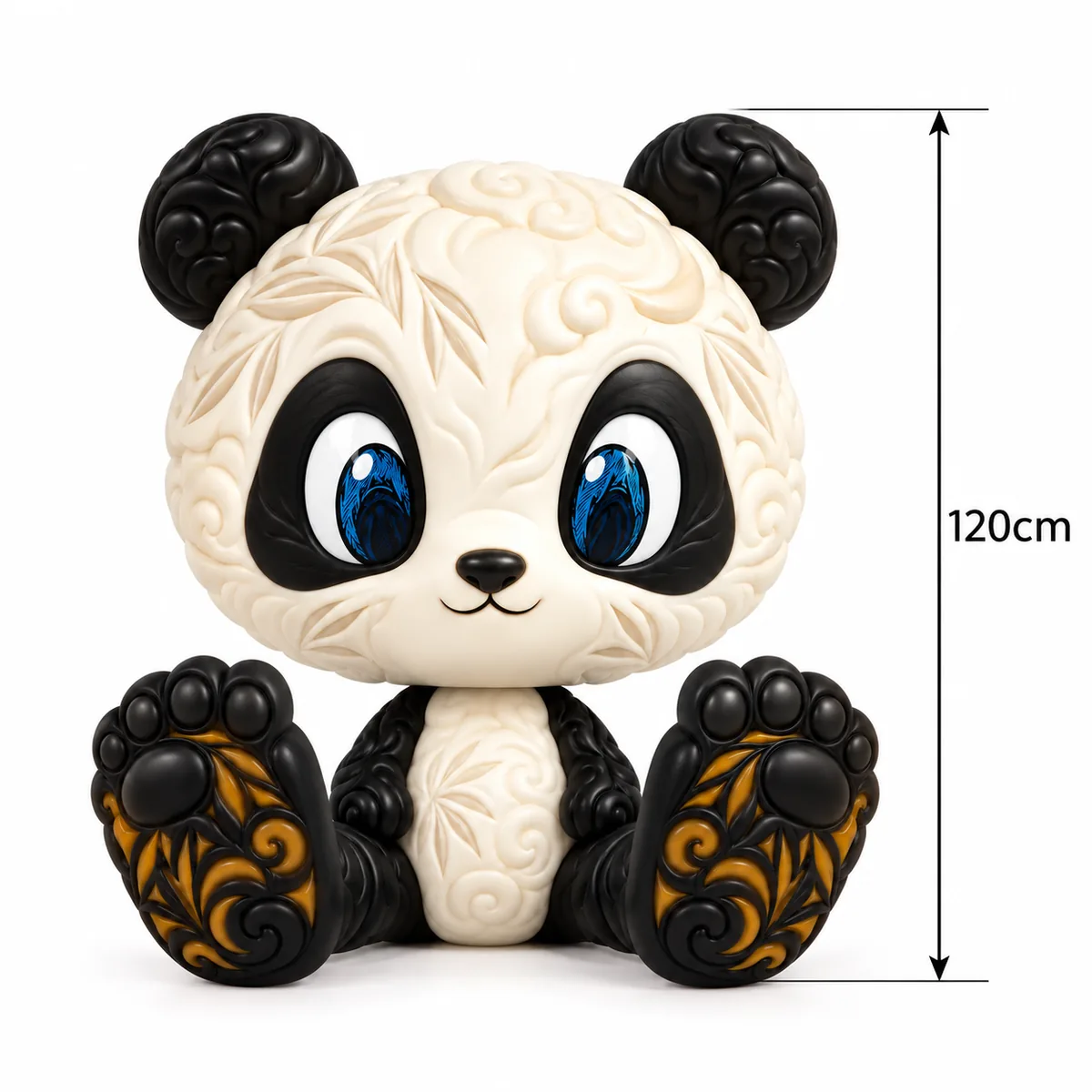
Call something an art toy and people expect vinyl, a box, a small run and a shelf. Call it a sculpture and they expect bronze, a plinth and a gallery. Neither describes what we make, and we’ve stopped trying to pick a side.
The character. An art toy starts from a designed figure with a personality, not from an abstract form, and that’s why they’re pleasant to live with. You don’t have to interpret them. They also gave us the idea that a figure can be produced in a run rather than once, which is the only reason any of this is affordable.
The expectation that form is the point. At 120 cm, a figure is too big to be a decorative object sitting among other things. It occupies a room the way furniture does, and if the silhouette isn’t considered it becomes an expensive obstacle. So we work the shape at five metres rather than at arm’s length, which is a sculptural habit rather than a toy one.
The material comes from there too. Fiberglass is a sculptural material with a long history in large work. It’s not what a toy is usually made of, and it behaves differently in every way that matters: it’s rigid, hollow, repairable, and light for its size.
If you think of it as a toy, you’ll underestimate the placement decision and you’ll expect it to be tough in ways it isn’t. If you think of it as gallery sculpture, you’ll over-handle it and worry about dust more than you need to, and you’ll put it somewhere too formal.
The useful middle position is: it’s a produced object, made by hand in a material that will last, designed to be lived with rather than preserved. Move it when you want to. Dust it when it needs it. Don’t put it in direct sun.
Mostly because the community that understands what we make already uses the term, and because “sculpture” makes people assume a price range we’re not in. The word isn’t worth defending. What the object is doesn’t change based on what anyone calls it.
The relief-patterned pieces are the ones that most obviously sit between the two. Bamboo Cloud Relief Panda has surface carving that only reads up close, and a silhouette built for distance.
