
Our Location
304 North Cardinal St.
Dorchester Center, MA 02124

The packing is boring on purpose. A plain walk through the layers, and why the boring version survives customs handlers.
Good packing has no drama to describe. That’s the point. If you open one of our cartons and think the packaging looks overbuilt, it’s because it was designed around the worst case rather than the average one.
The figure is bagged first, in a soft sleeve that keeps anything from rubbing directly on the paint during the small movements that happen inside a box. Protruding parts, ears, a raised arm, a staff, get their own wraps before the main wrap goes on, because a protrusion is a lever and levers break.
Then foam, cut to the shape rather than loose fill. Loose peanuts and crumpled paper let a piece settle downward over a long trip, and once it settles it can end up resting its weight on the thinnest part of the shell. Cut foam holds position.
Double-wall carton, and the void between the inner and outer box is filled so that a corner impact is spread out rather than concentrated. We tape seams rather than just the flaps.
They help, sometimes. They don’t survive being upside down in a sorting facility, and they don’t tell anyone how the box should be oriented. Orientation arrows on two faces do more work than the fragile marking does.
Open the box where the figure is going to stand, if you can. Unpacking a 120 cm piece and then carrying it through a doorway is how people scratch door frames and dent figures. Cut the tape, don’t pull it, since a blade dragged across the top flaps will find the shell eventually.
Check the piece before you sign off on the delivery, and take photos of the carton if it looks badly handled. Not because we enjoy paperwork, but because carrier claims need it and there’s a short window to file.
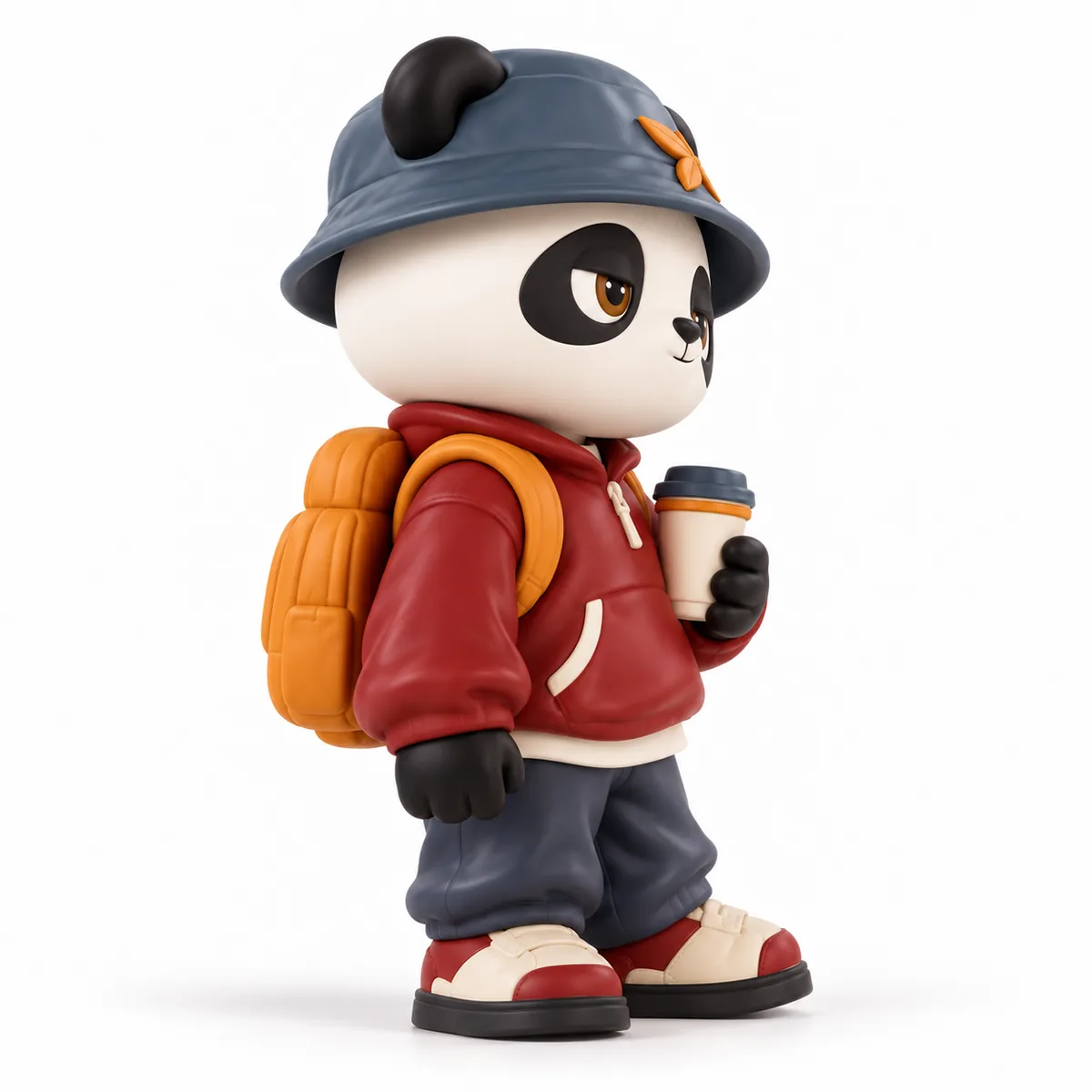
Characters with things sticking out are the ones that take longest to pack. Orange Backpack Panda has a pack and a raised arm, which is two extra wraps and an extra twenty minutes before it’s ready to close.
