
Our Location
304 North Cardinal St.
Dorchester Center, MA 02124
A colourway that reaches the catalogue has usually been through three checks and at least one rejection. Here is what kills the ones nobody sees.
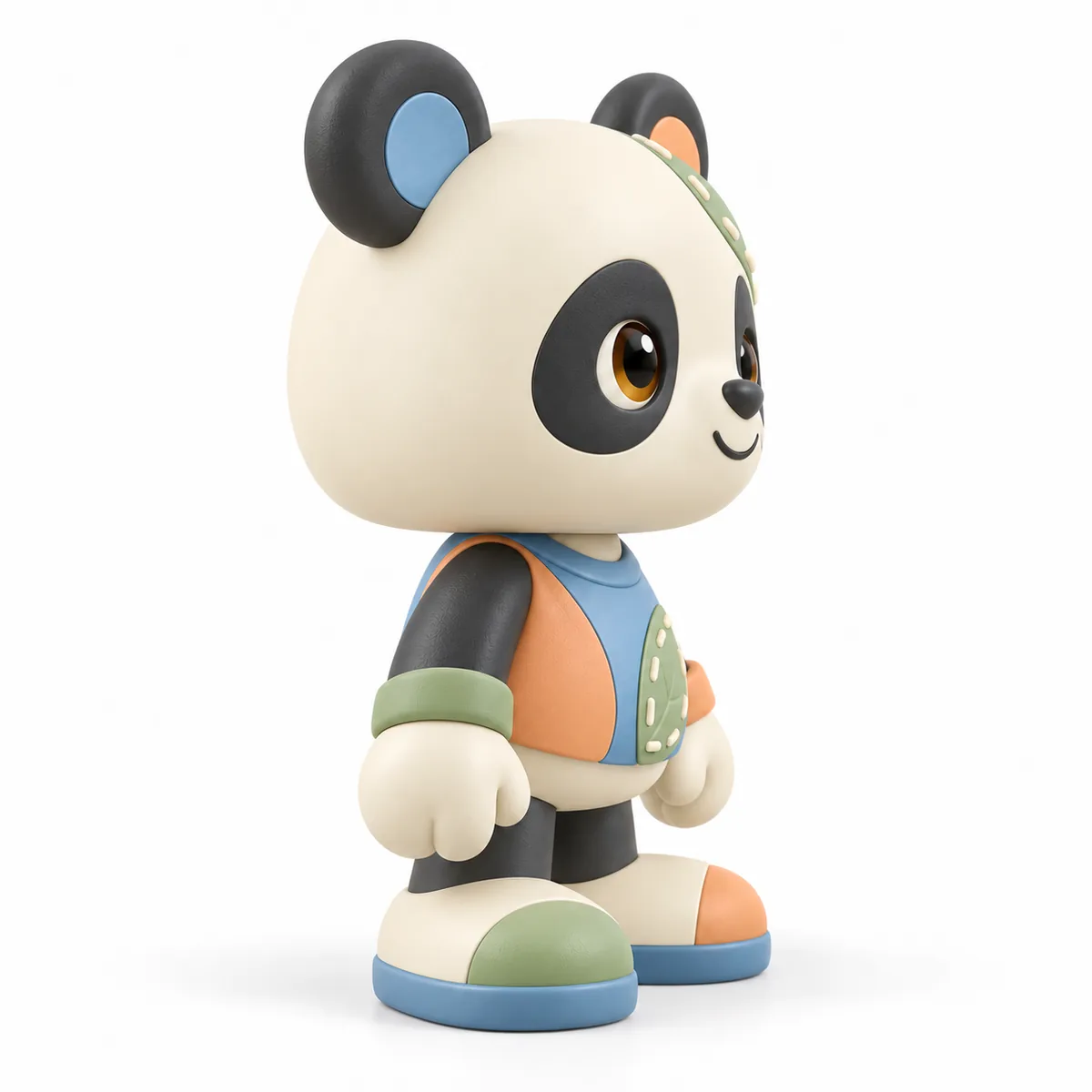
Most of the colourways we draw never get made. Three of the last five we worked up for one character were shelved before a mould was opened, and none of them were shelved because they looked bad on a screen.
A colour on a monitor is emitted light. On a figure it is reflected light off a matte surface, and matte eats saturation. A mid blue that looks confident as a flat swatch goes chalky once it is on a curved shell, because the curve throws half the area into shadow and your eye reads the average of both halves.
So the first check never happens on a screen. We spray a test panel and look at it under the light most living rooms actually have: a warm bulb, off to one side, in the evening. Colourways that only work under neutral daylight go back in the drawer. That is the single most common reason one dies.
Every character has tight spots. Under an arm, behind an ear, inside a collar, between fingers. Airbrushed paint does not build evenly in those places, and a colour that is perfect across a chest can sit two shades darker in a recess and read as dirt rather than shadow.
The fix is usually to split the scheme, with a slightly lighter mix for the recessed areas. That leaves two mixes to keep consistent for as long as the character is offered. We have said no at exactly this point. Once a colourway needs three separate mixes to look correct, it stops being a colourway and becomes a one-off, and we are not set up to sell one-offs.
This is the check that costs the most time, and it is the one buyers rarely think about. Everything here is made to order. A colourway is not finished when one good piece comes out of the booth. It is finished when we can mix it, spray it, and land inside a tolerance we would be willing to ship, twice, months apart, by hand.
Hand-spraying drifts. A pass that runs ten percent heavier turns a warm grey into something with a green cast in it. When that happens the piece goes back for a repaint before it ships, which is the most expensive version of this problem, and part of why a figure is $4,999 rather than something nearer a mass-produced price.
Where we have failed: colourways have been shelved after three attempts because we could not repeat them to our own tolerance. We do not publish those, and we do not release them as small editions to make the effort look intentional. It is also the honest reason the piece you receive will not be a pixel match to the photo you ordered from, which we went into properly in Two Copies Are Never Identical.
What survives all three checks is simpler than what we started with. Two or three body colours, one accent, and a recess mix close enough to the main colour that you would not spot it as separate. Patchwork Panda looks complicated until you count the mixes, and then it reads as four.
If colour is what you are choosing by, most of the characters where it does the heavy lifting sit in Colour & Pattern. The reason every one of them is matte rather than gloss is in What People Get Wrong About Fiberglass: a flat sheen is far easier to match across a repair than a reflective one.
